
Renting a 20 yard roll off dumpster in Brussels, WI can make a home renovation, roof replacement, large cleanout, or construction project easier to manage. A roll-off container gives you one designated place for approved debris instead of repeatedly loading a personal vehicle or arranging multiple small pickups. The 20-yard size is a common middle option: larger than a small garage-cleanout container but generally more manageable than the biggest construction boxes.
The right rental depends on more than the number of cubic yards. You need to check the type and weight of material, the amount of driveway or site space, delivery access, rental period, tonnage allowance, overage rates, and local disposal rules. This guide focuses on Brussels and the surrounding Door County area. It explains how to estimate capacity, compare published local offers, prepare a delivery site, and avoid common charges or disposal problems.
What Does a 20-Yard Dumpster Mean?
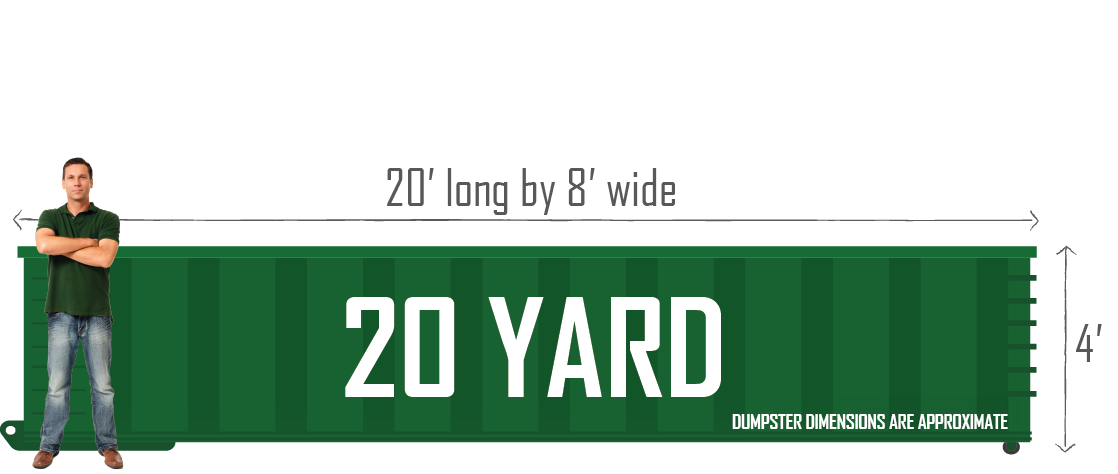
A 20-yard dumpster has a nominal capacity of 20 cubic yards. That is a volume measurement, not a weight allowance. A local rental listing from Green Bay Dumpster Rental describes its 20-yard container as approximately 22 feet long, 8 feet wide, and 4.5 feet high. The dimensions are approximate and may differ among container fleets, so ask the company for the actual container measurements before delivery.
Twenty cubic yards can be useful for medium-sized cleanouts and renovation projects. It may hold old cabinets, flooring, drywall, general household junk, wood offcuts, or roofing debris if the hauler accepts the material and the load stays within the permitted weight. Heavy materials such as concrete, soil, brick, and masonry can reach a weight limit long before the container looks full. Always ask about the material-specific rules.
Projects That May Suit a 20-Yard Roll-Off
A 20-yard container can be suitable for a multi-room renovation, a substantial basement or garage cleanout, a deck replacement, a larger roofing job, or a moderate construction project. It is often chosen when a smaller container would fill too quickly but there is not enough debris to justify a larger unit. The best size depends on the material volume and weight, not only the number of rooms or the project’s square footage.
For a roof, ask the hauler how it calculates roofing squares, shingle layers, and weight. Asphalt shingles are dense, and a container that appears half-full can already be heavy. For a remodel, estimate cabinetry, drywall, flooring, trim, packaging, and fixtures separately. For a property cleanout, estimate furniture, mattresses, household goods, and general rubbish. A few photos or a short item list can help the provider recommend a suitable size.
When a Smaller or Larger Container May Be Better
A smaller container may work for a single-room update, a small shed cleanout, or a limited amount of yard debris. It may reduce the rental price and take up less driveway space. However, if the project expands or the debris estimate is low, a smaller dumpster can fill too quickly and require a second haul. Ask whether a swap-out is available and what it costs.
A 30-yard container may be more appropriate for a major renovation, large estate cleanout, or a high-volume construction project. A 40-yard container may suit commercial or extensive construction work where loading access and space are available. Larger containers are not always the best option: they occupy more room, can be harder to place in a residential driveway, and may encourage overfilling or loading above the fill line. Compare the price difference and material limits before deciding.
Brussels, Wisconsin Service Availability
Brussels is in Door County, and not every Wisconsin hauler serves every part of the county. Confirm that the company delivers to your exact address, not merely to a nearby city or a broad region. Green Bay Dumpster Rental’s Brussels service-area page explicitly lists Brussels and describes roll-off options, including a 20-yard size. Its Door County page also identifies nearby communities and explains its delivery and pickup process.
Service-area coverage does not guarantee immediate availability on your requested date. Ask whether the company has a 20-yard container available for your booking window, whether delivery to your road or property is practical, and whether there are seasonal or route-related constraints. Rural driveways, narrow lanes, overhead branches, soft shoulders, and steep grades can affect truck access. Give the provider accurate instructions before paying a deposit.
How Much Does a 20-Yard Dumpster Cost in Brussels?
Rental prices vary with the company, delivery distance, container availability, included weight, rental duration, disposal fees, fuel charges, taxes, and type of debris. A Brussels-area provider page publishes a price range for 20-yard rentals, while the same provider’s product page shows a separate online-order price and phone-order price with an included rental term and weight allowance. Different pages, booking dates, and load conditions can produce different totals.
For this reason, treat online prices as a starting point rather than a guaranteed quote. Request a written price for your exact address and material type. The quote should state delivery and pickup, rental days, included tonnage, the cost per additional ton, any extra-day rate, taxes, fuel or environmental fees, and potential trip charges. Ask whether the price changes for roofing shingles, heavy debris, or a container that must be placed in a special location. A clear written quote is more useful than comparing one headline figure with another company’s incomplete offer.
Understand the Included Weight and Overage Fees
Most roll-off rentals include a weight allowance. If the load exceeds that allowance, the customer may pay an additional amount per ton or partial ton according to the rental agreement. This is particularly important for roofing, concrete, soil, brick, tile, and plaster. The container’s cubic capacity does not tell you whether the truck can legally or safely haul the loaded weight.
Before ordering, describe the heaviest materials you expect to dispose of. Ask whether there is a separate container or rate for concrete, dirt, roofing, or clean fill. Do not mix restricted heavy waste with general household debris unless the hauler confirms it is permitted. Loading heavy material only to a low height may still exceed the permitted weight, so follow the company’s directions rather than relying on visual fullness.
Rental Period and Pickup Scheduling
Rental terms may range from a few days to a week or more. Some area providers advertise a rental period of up to 14 or 15 days, while other companies use shorter standard terms. Check the agreement for the exact start and end date, whether weekends count, and the daily or weekly extension fee. Do not assume an online offer from a nearby service page applies to every order.
Ask how pickup is requested. Some providers want a call, email, text, or online notice when the container is ready. Schedule removal before the planned end of the rental so the container does not block the driveway or interfere with contractors. If the project finishes early, ask whether an early pickup is available and whether it changes the price. If the project is delayed, request an extension before the original term expires.
Choose the Placement Location
Most residential customers prefer a driveway or other private hard surface. The placement area should be level, stable, and accessible to the delivery truck. Measure the available length and width, and consider the room needed for the truck to approach, lower the container, and leave. A 20-yard container may be about 22 feet long and 8 feet wide, but the truck requires additional clearance to maneuver and roll the box off.
Protect the driveway if required by the rental company. Some providers recommend plywood or boards under the container rails to help reduce surface damage. Ask whether the company uses protective boards and whether the customer must supply them. Keep vehicles, trailers, basketball hoops, low branches, wires, and other obstructions out of the approach path. Photograph the placement area before delivery so any existing surface damage is documented.
Driveway, Road, and Right-of-Way Considerations
Placing a dumpster on private property is different from placing it on a public street, sidewalk, or other right-of-way. If the container must occupy a public area, ask the appropriate local government office whether a permit, traffic control, barricades, or other approval is required. Do not assume a hauler’s permission is a municipal permit. The rules can depend on the exact road, property, and jurisdiction.
Brussels addresses may fall under different local road or property authorities. Contact the relevant town, village, or county office for the property location before arranging public placement. Keep sidewalks, sight lines, access for emergency vehicles, mail delivery, and neighbouring driveways clear. If a container must be located on a shared access road, obtain permission from the responsible owner or authority.
What Can Usually Go in a Roll-Off Dumpster?
General household rubbish, furniture, many non-hazardous renovation materials, wood, drywall, flooring, cabinets, doors, and packaging may be accepted by some haulers. The exact list is company-specific and may depend on the disposal facility. Ask for the provider’s current prohibited-items and accepted-materials list before filling the box. If the job produces recyclable or reusable items, consider separating them rather than sending everything to landfill.
Some materials require special handling or a separate disposal route. Common examples include hazardous chemicals, fuels, solvents, pesticides, batteries, tires, appliances containing refrigerants, electronics, asbestos-containing materials, medical waste, and liquid paint. A hauler may accept certain items only through a dedicated service or facility. Never assume a material is permitted because it fits inside the container.
Door County and Wisconsin Disposal Considerations
Door County’s Chapter 24 recycling ordinance addresses the handling of recyclables and several categories of non-disposable material. The county document lists items that cannot simply be placed out for ordinary waste collection, and it includes provisions for special material handling. Wisconsin DNR guidance also explains that demolition waste is regulated and that certain materials may require an appropriate facility rather than ordinary disposal.
These rules do not mean every remodeling material is automatically prohibited from a roll-off rental. They do mean you should identify the waste stream and confirm where it will go. Ask the hauler whether the receiving facility accepts the exact materials from your project. For demolition work, older buildings, suspect asbestos, chemicals, or contaminated material, obtain appropriate professional guidance before disturbing or loading debris. Consult the Door County Chapter 24 ordinance and the Wisconsin DNR demolition waste guidance for official background.
How to Load the Container Safely
Place heavy items toward the bottom and distribute the load evenly. Break down bulky materials where safe, and avoid leaving large voids that waste space. Do not load above the container’s fill line or allow debris to hang over the sides. Drivers may refuse to haul an unsafe or overfilled container. Follow the hauler’s instructions for doors, lids, and loading access, and keep people away from the truck’s operating area during delivery and pickup.
Wear suitable gloves, eye protection, sturdy footwear, and other protective equipment for the debris being handled. Do not climb inside the container if it is not designed for access. Keep sharp metal, glass, and protruding materials controlled. If the project involves hazardous dust, mold, asbestos, lead paint, or chemical contamination, do not use ordinary cleanup procedures; consult a qualified professional and follow the relevant regulations.
Questions to Ask Before Booking
Ask the provider whether it delivers to your exact Brussels address and whether the 20-yard size is available on the desired date. Confirm the container dimensions, delivery and pickup windows, included rental term, included tonnage, overage charge, extra-day rate, taxes, fuel or environmental fees, and any trip charges. Provide an accurate description of the waste and ask which items are prohibited.
Also confirm placement requirements, driveway protection, public-road permit responsibilities, cancellation terms, payment method, and the process for arranging pickup. Ask what happens if the driver cannot access the property or if the load is too heavy. Save the written quote and rental terms. Clear answers before delivery can prevent unexpected charges and delays.
When a 20-Yard Rental Is Not the Best Choice
A 20-yard box may be too large for a small bathroom update or a limited garage cleanout, where a smaller container would cost less and fit more easily. It may be too small for a major whole-house renovation, commercial teardown, or extensive cleanout that produces a large volume of bulky debris. It may also be the wrong container for concrete, dirt, or other dense materials because of weight limits.
If the material volume or weight is uncertain, send the provider photographs and a written list of the project debris. Ask whether a smaller box, larger box, dedicated heavy-material container, or multiple pickups would be more economical. A good provider should explain the trade-offs instead of simply recommending the largest available size.
Frequently Asked Questions
How much can a 20-yard dumpster hold?
It has a nominal volume of 20 cubic yards. Actual dimensions vary by provider; one Door County product listing describes a container approximately 22 feet long, 8 feet wide, and 4.5 feet high. Confirm the dimensions and weight allowance for the exact unit being delivered.
Is a 20-yard dumpster available in Brussels, WI?
Green Bay Dumpster Rental’s Brussels service-area page lists Brussels and describes 20-yard roll-off options. Availability, delivery dates, and access should still be confirmed for your exact address.
How much does a 20-yard dumpster cost in Brussels?
Published online prices can differ according to rental term, tonnage allowance, and order method. Request a written quote for your address and debris type, including overage and extra-day fees.
Can I put concrete or dirt in a 20-yard dumpster?
Do not assume so. Concrete and soil are very heavy and may require a dedicated container or special rate. Ask the hauler for written approval and weight limits before loading them.
Do I need a permit to place a dumpster on the street?
Public-road or right-of-way placement may require local permission, a permit, or barricades. Ask the authority responsible for the specific road and confirm who obtains any required approval.
Conclusion
A 20 yard roll off dumpster in Brussels, WI can be a practical choice for medium-sized renovations, roofing projects, and substantial cleanouts when the debris type and weight fit the hauler’s rules. Before booking, confirm service to your exact address, container dimensions, included tonnage, rental period, full price, placement requirements, and accepted materials. Local providers advertise Brussels-area service, but availability and rates change. A written quote and a clear disposal plan will help you choose the right container and avoid preventable charges.
