
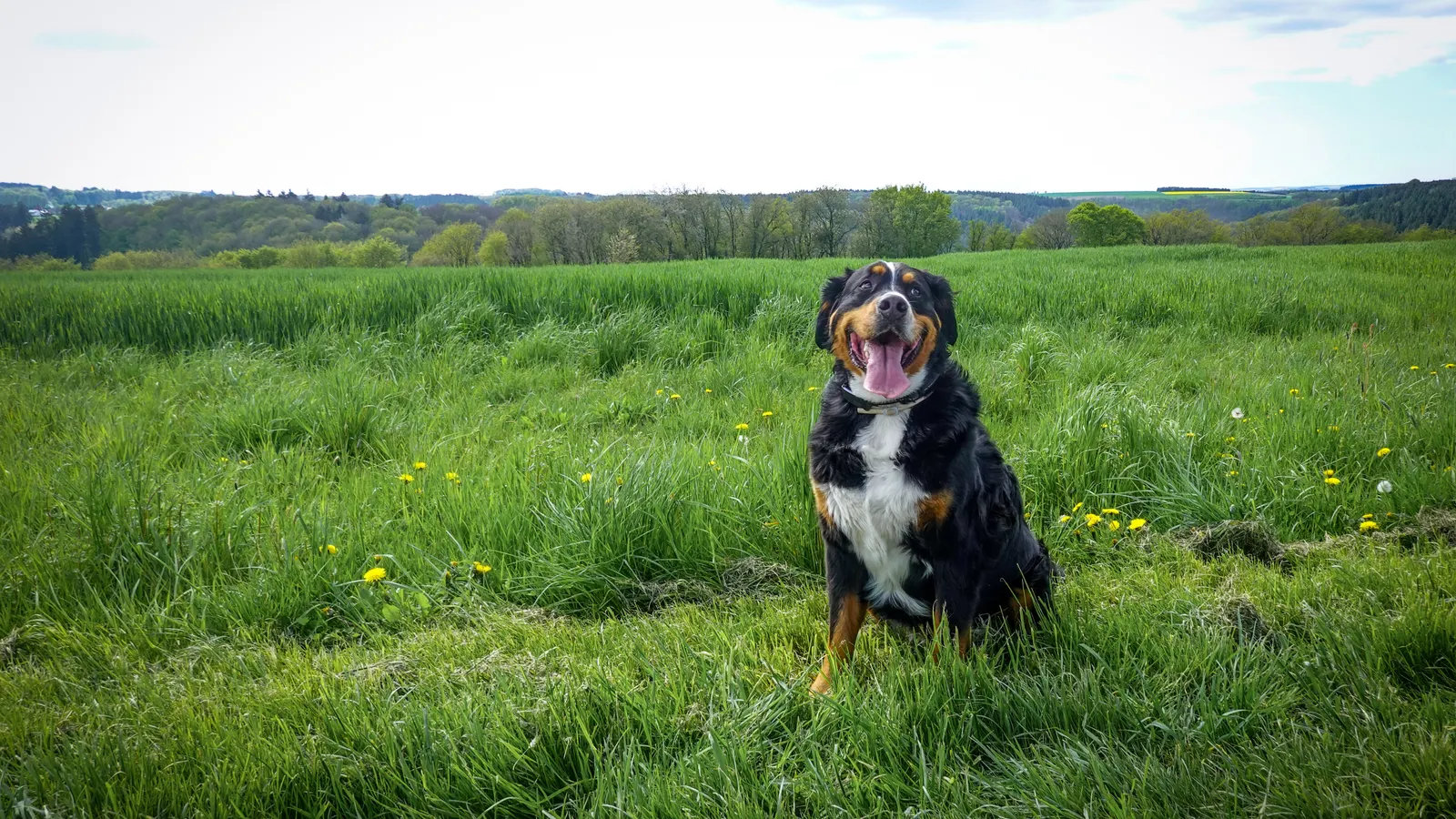
A Bernese Mountain Dog Golden Retriever mix is a large, fluffy family dog that is usually friendly, patient and eager to please. It often goes by the name Golden Mountain Dog, and most adults stand about 24 to 26 inches tall and weigh somewhere around 75 to 110 pounds.
That size comes with real responsibilities. This guide walks through what to expect from the look, temperament, exercise needs, grooming, health and lifespan of the mix, so you can decide whether a dog this big fits your home, your schedule and your budget.
Meet the Golden Mountain Dog
The Golden Mountain Dog is a crossbreed. That means it does not have a written breed standard, and puppies in one litter can differ in size, coat and energy. You may also see it called a Bernese Golden Mountain Dog or a Golden Bernese. A related cross, the Golden Mountain Doodle, adds a Poodle to the mix and produces a different coat, so check which dog a seller is actually describing.
Because the mix has no standard, the best clue to your puppy’s future is the parents. The AKC profile of the Bernese Mountain Dog describes a big, powerful working dog with an affectionate, generally placid nature. The AKC profile of the Golden Retriever describes a hardworking gundog with a love of life. Your dog may take after either side, or land somewhere in between.
Bernese Mountain Dog Golden Retriever mix size and appearance
Most breed guides give similar ranges for the mix, although a few list larger dogs. Use the numbers below as a guide, and ask the breeder or rescue for the real sizes of both parents.
| Trait | Typical range |
|---|---|
| Height at the shoulder | About 24 to 26 inches |
| Weight | About 75 to 110 pounds, with some dogs heavier |
| Coat | Dense, medium to long, straight or slightly wavy |
| Colors | Golden, cream, black and tan, tricolor or a blend |
| Ears and tail | Floppy ears and a full, feathered tail |
| Lifespan | Often quoted at 10 to 12 years, with wider ranges in some guides |
Males tend to be larger than females. Coat color is hard to predict, because the Bernese tricolor pattern and the Golden’s gold coat are both possible. Some puppies look like a fluffy Golden with a darker saddle, and others look like a Bernese with a lighter face.
Temperament and personality
Both parent breeds are known for gentle, social personalities, and that is the main reason people look for this mix. Most Golden Mountain Dogs are affectionate, quick to learn and happiest when they are close to their family. Many greet visitors with a wagging tail rather than a bark, which makes them better companions than watchdogs.
Here are the traits owners usually describe:
- People focused: They like being in the same room, and they dislike long stretches alone.
- Patient with children: They often tolerate noisy households, but a big puppy can knock over a toddler by accident, so supervise play.
- Eager to please: Training usually goes well with praise, play and treats.
- Slow to mature: Large dogs act like puppies for a long time, often into their second year.
- Sensitive: Harsh corrections can backfire, and calm, consistent guidance works better.
Exercise, training and daily routine
This mix is active, but it is not a tireless athlete. Many adults settle well with about an hour of daily activity, split into a morning walk and an evening session of play, swimming or scent games. Hiking, fetch and water play suit the Golden side, while the Bernese side tends to enjoy steady outdoor time in cool weather.
- Start socialization early. Introduce your puppy to different people, surfaces, sounds and friendly dogs in a calm, positive way.
- Teach leash manners young. A 20 pound puppy that pulls becomes a 90 pound dog that drags you down the street.
- Use reward-based training. Short sessions of five to ten minutes a few times a day work better than one long drill.
- Protect growing joints. Avoid long runs, repeated jumping and slippery floors while the dog is still growing.
- Add mental work. Food puzzles, sniff walks and basic tricks tire the brain as well as the body.
- Plan for alone time. Build up absences slowly so the dog learns that you always return.
Ask your vet about a large breed puppy food and a feeding plan that keeps growth steady. A lean adult dog is easier on the joints than a heavy one.
Grooming and shedding
Expect hair, and plenty of it. The double coat sheds year round, with heavy shedding in spring and fall. Brush a few times each week, and daily during peak shedding, using a slicker brush and an undercoat rake to reach the dense layer near the skin. Do not shave the coat. It helps insulate the dog in both cold and warm weather, and shaving can damage how it grows back.
- Bathe only when the dog is dirty, and dry the coat thoroughly afterward.
- Check and clean the ears often, because floppy ears hold moisture.
- Trim nails every few weeks and brush the teeth several times a week.
- Look under the feathering and behind the ears for mats and burrs.
Some owners also keep grooming smells in mind. If you like to keep your home fresh, our guide to Parfum VI by Gianni Vive Sulman covers a fragrance for people, but a lint roller and a strong vacuum matter more with this dog.
Health concerns to discuss with your vet
Crossbreeds can inherit health problems from either parent, and both of these breeds have known weak spots. Careful breeding lowers the risk, but it does not remove it. Talk with a vet about screening and prevention. Common concerns include:
- Hip and elbow dysplasia: Joint malformation that can lead to pain and arthritis.
- Cancer: A serious concern in both parent breeds, which is one reason lifespans can be shorter than people hope.
- Bloat: A life threatening emergency in deep-chested dogs. Learn the signs, such as a swollen belly, restlessness and unproductive retching, and go to an emergency vet at once.
- Heart and eye conditions: Some lines carry inherited problems that screening can flag.
- Skin trouble: Thick coats can hide hot spots and infections.
A responsible breeder can show hip, elbow, heart and eye evaluations for both parents and will talk openly about health in the family. Be wary of any seller who offers no records or says the mix is automatically healthier because it is a cross. Hybrid vigor can help, but it is not a guarantee.
Lifespan and the long view
Large dogs usually live shorter lives than small ones. Many guides place the Golden Mountain Dog at roughly 10 to 12 years, though some list a wider range. The Bernese side pulls the number toward the lower end, while Golden Retrievers often live a bit longer. Plan for senior care, such as joint supplements your vet approves, softer bedding, ramps and more frequent checkups.
Saying goodbye to a pet is painful, and people often struggle to find words for it. Our guide on what to say at a funeral offers gentle phrasing that can also help when you comfort a friend who has lost an animal. You can find more family and home reads in the Lifestyle section.
Is this mix right for you?
A Golden Mountain Dog tends to suit you if you:
- Want a loving, people-oriented dog that joins family life
- Have space for a big dog and a car that fits one
- Live in a cool or moderate climate, or can manage heat carefully
- Can commit to daily exercise, training and regular brushing
- Are ready for food and vet bills that match a dog of this size
It may not suit you if you:
- Live in a tiny apartment or a very hot area with no cooling
- Cannot tolerate dog hair in the house
- Are away from home for most of the day
- Would struggle to lift or restrain a strong dog
Hot weather is a particular worry. The dense coat traps heat, so provide shade, fresh water and indoor cooling, exercise early or late in the day, and never leave the dog in a parked car.
How to find a healthy puppy or adult dog
If you go through a breeder, ask to meet the mother and see where the puppies are raised. Request written health clearances for both parents, a contract and a return policy. Walk away from sellers who always have puppies available, refuse visits or push you to pay a deposit quickly.
Adoption is another good path. Rescue groups for Bernese Mountain Dogs and Golden Retrievers sometimes take in mixes, and shelters occasionally have adult dogs whose size and personality are already clear. An adult dog also lets you skip the toughest puppy months. Whatever route you choose, meet the dog first and spend time with the whole family before you commit. The AKC also lets mixed-breed dogs enroll in its Canine Partners program, which is a way to take part in dog sports and training events with your mix.
Frequently asked questions
What is a Bernese Mountain Dog Golden Retriever mix called?
It is most often called a Golden Mountain Dog. You may also see Bernese Golden Mountain Dog or Golden Bernese. It is not the same as a Golden Mountain Doodle, which adds a Poodle and usually has a curlier coat.
How big does a Golden Mountain Dog get?
Most adults stand about 24 to 26 inches tall and weigh roughly 75 to 110 pounds, although some are larger. Size depends on which parent the puppy resembles, so ask for the parents’ heights and weights before you choose a puppy.
How long does this mix live?
Many guides list about 10 to 12 years, and some give a wider range. Genetics, weight and health care all play a part. Keeping your dog lean, up to date on vet visits and active within comfortable limits gives the best chance at a long life.
Do these dogs shed a lot?
Yes. The thick double coat sheds all year and more heavily in spring and fall. Brush several times a week and daily during peak shedding. Do not shave the coat, because it protects the skin and helps the dog regulate temperature.
Are Golden Mountain Dogs good with children?
Usually, yes. Both parent breeds are known for gentle, patient personalities. Because the dogs are large and sometimes clumsy, supervise young children, and teach kids to approach and pet the dog calmly. Early training and socialization help a great deal.
How much exercise does the mix need?
Most adults do well with about an hour of activity a day, divided between walks, play and training. Many enjoy swimming. Puppies and young dogs should avoid too much hard running while their joints develop, and mental games help tire them out safely.
Can a Golden Mountain Dog live in an apartment?
It is possible if the dog gets enough exercise and the building allows large breeds, but it is not ideal. A big, fluffy dog needs room to move, regular outdoor time and a cool place to rest. Daily walks and training become even more important.
Conclusion
A Bernese Mountain Dog Golden Retriever mix can be a gentle, loyal companion, but it asks for space, grooming time and steady vet care. Look closely at both parents, plan for daily exercise and expect a lifespan of roughly 10 to 12 years. Choose a source that shares health records openly, and bring the dog home only when your household is ready.
