
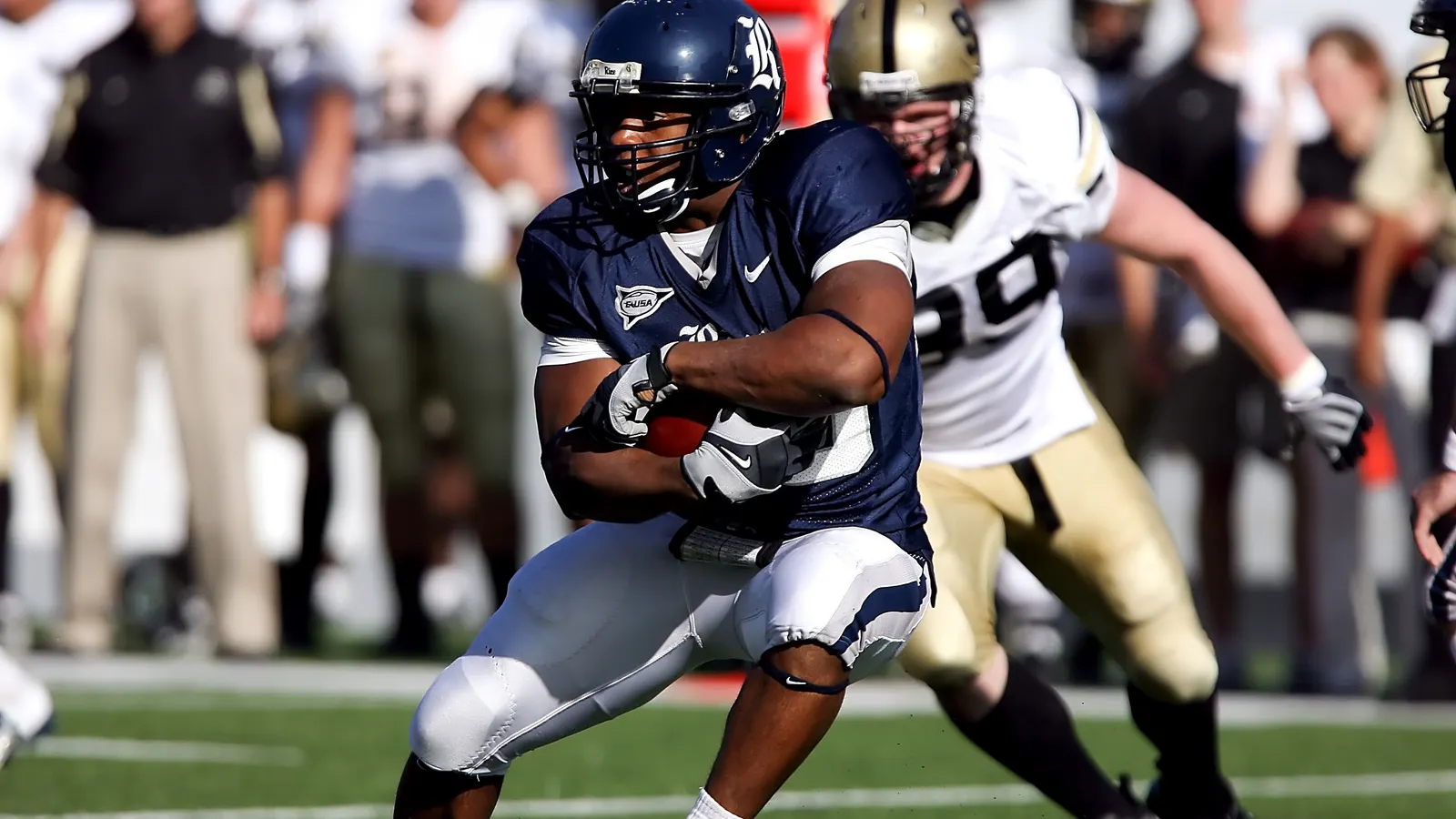
If you have scrolled through a recruiting board or a college roster and wondered what does ATH mean in football, the short answer is athlete. It is a label, not a position you will see on the field, and it tells you a player has the physical tools to play more than one spot but has not been assigned a single home yet.
This guide explains where the label comes from, why recruits receive it, which positions ATH players often settle into and how to read the tag whether you follow recruiting or play a college football video game.
What does ATH mean in football?
ATH is short for athlete. In recruiting and roster listings, it marks a player whose skills do not fit neatly into one position. It is common for high school prospects who play several spots, or who play out of position for their team, and it also appears on some college rosters for incoming freshmen who have not been placed.
It is important to separate the label from the game. Referees do not call a position named ATH, and there is no ATH on a defensive or offensive formation chart. On Saturday, an ATH recruit lines up as a wide receiver, defensive back, running back, linebacker or at another real position. The tag only describes the player before that decision is made.
Why recruits are labeled ATH
Playing several positions in high school
On smaller teams, the best players often play both ways. A prospect might return kicks, play receiver on offense and safety on defense. Listing one position would hide part of the picture, so the athlete label signals range.
Playing out of position
Some talented players spend high school at a spot that will not be their college role. A quarterback with elite speed, for example, may be projected as a receiver or defensive back in college. Coaches and recruiting services may use the ATH tag until a program decides how to use him.
Waiting on growth and development
Young players can change shape quickly. A lean teenager may add weight and move from defensive back to linebacker, or grow into a tight end. The label gives programs time to see how the body develops.
Positions ATH players often move to
There is no set rule, but ATH recruits commonly end up at these spots:
- Wide receiver or slot receiver, when speed and hands stand out.
- Cornerback or safety, when coverage skills and instincts show up.
- Running back or returner, when vision and burst are the strengths.
- Linebacker or edge defender, when size and tackling ability grow.
- Quarterback, in some cases, when arm talent and decision-making justify it.
The final spot depends on what the program needs, how the athlete develops and where he shows the most promise in practice.
Is ATH a good or bad label?
It can be both. When a player lists himself as an athlete, coaches who search for a specific position such as wide receiver may not see him in those results, a trade-off covered in this recruiting guide to listing your position as athlete. On the other hand, once they find you, a varied skill set can be exciting, and a versatile player can open a faster path to playing time when a team is deep at one spot but thin at another.
The label also demands more work. A recruit who plays several positions must learn multiple assignments and playbook details. Coaches tend to reward players who study after practice and adapt quickly, so the ATH tag is most useful for those who truly can handle more than one job.
Well-known examples of athlete recruits
Many standout college and NFL players entered programs as athletes. Denard Robinson arrived at Michigan as a four-star athlete and became a record-setting quarterback, and later the Jacksonville Jaguars drafted him as a running back. Jabrill Peppers came to Michigan as a highly ranked athlete and played linebacker, defensive back, running back and returner. JuJu Smith-Schuster played safety and receiver in high school before committing to USC as an athlete and later starring at receiver.
These examples show how fluid the label is. A single recruit may be recruited as an athlete, play defense in college and then switch positions again in the pros. If you like quick explainers on other topics, our comparison of Disneyland and Disney World uses the same side-by-side approach.
How coaches decide an ATH player’s position
Coaches weigh several factors before choosing a spot:
- Physical profile: height, weight, speed, strength and agility.
- Skill traits: hands, tackling, footwork, balance and ball skills.
- Football intelligence: how quickly the player learns assignments and reads plays.
- Team need: depth at each position and the scheme in use.
- Practice results: early camp and spring workouts often settle the question.
Some players are redshirted to build strength and learn the system before the staff commits to a position. Others move in their first season after a clear need appears.
ATH in video games and fan discussions
Football video games borrow the term. In College Football 25 style recruiting modes, an ATH recruit is a prospect who can be developed into several roles after signing, and players can usually change the position before the next season. This mirrors real life, where the staff chooses the final spot once the player arrives.
Fans also use the tag in message boards and recruiting rankings. When you see it, read it as a note about versatility rather than a statement about quality. Some ATH prospects are among the top-ranked players in a class, while others are raw talents still searching for a role.
Tips for players who list themselves as ATH
- List one to three main positions if you mainly play those spots, and use ATH only when your coach really uses you in more.
- Build highlight clips that show each position separately.
- Tell coaches which position you prefer and where you think you fit best.
- Study the playbook for every role you may play.
- Share measurements and testing numbers so coaches can project your growth.
Other entertainment explainers on this site cover topics from gear to travel. If you play or follow music, our guide to the Hughes & Kettner Spirit 200 Floor amp shows the same plain-language approach on a very different subject.
Frequently asked questions
Is ATH an actual football position?
No. ATH is a recruiting and roster label meaning athlete. During games, these players are assigned to real positions such as wide receiver, defensive back, running back or linebacker. The tag only describes a player who has not yet settled into one role.
What does ATH stand for in college football recruiting?
ATH stands for athlete. Recruiting services and programs use it for prospects who can play multiple positions or whose best college position is still uncertain. It is common for versatile high school players and for some incoming freshmen on rosters.
Can an ATH recruit become a starter?
Yes. Many athlete recruits become starters once the staff finds the right fit. Some succeed quickly at a single spot, while others contribute at several positions or on special teams. Development, practice results and team needs all affect the timeline.
Do ATH players get fewer scholarship offers?
Not necessarily. Some are highly ranked and receive many offers. The label can make searches harder because coaches often filter by position, so players may need extra film and outreach to make sure the right staffs notice their skills.
What positions do ATH players usually play in college?
Common landing spots include wide receiver, cornerback, safety, running back and linebacker, with some moving to quarterback or tight end. The choice depends on size, speed, skills and what the roster needs, and it can change after the first season.
Should I list myself as ATH on my recruiting profile?
Only if your coach uses you at several positions or you truly play more than a few. If you mainly play one or two spots, list those instead. A clear main position helps coaches find your film when they search by position.
Conclusion
ATH means athlete, a recruiting and roster label for players who can fill more than one role and have not settled on a single position. It is not a spot on the field, and it can help or hinder depending on how coaches search. Treat it as a sign of versatility and watch where the player lands.
