
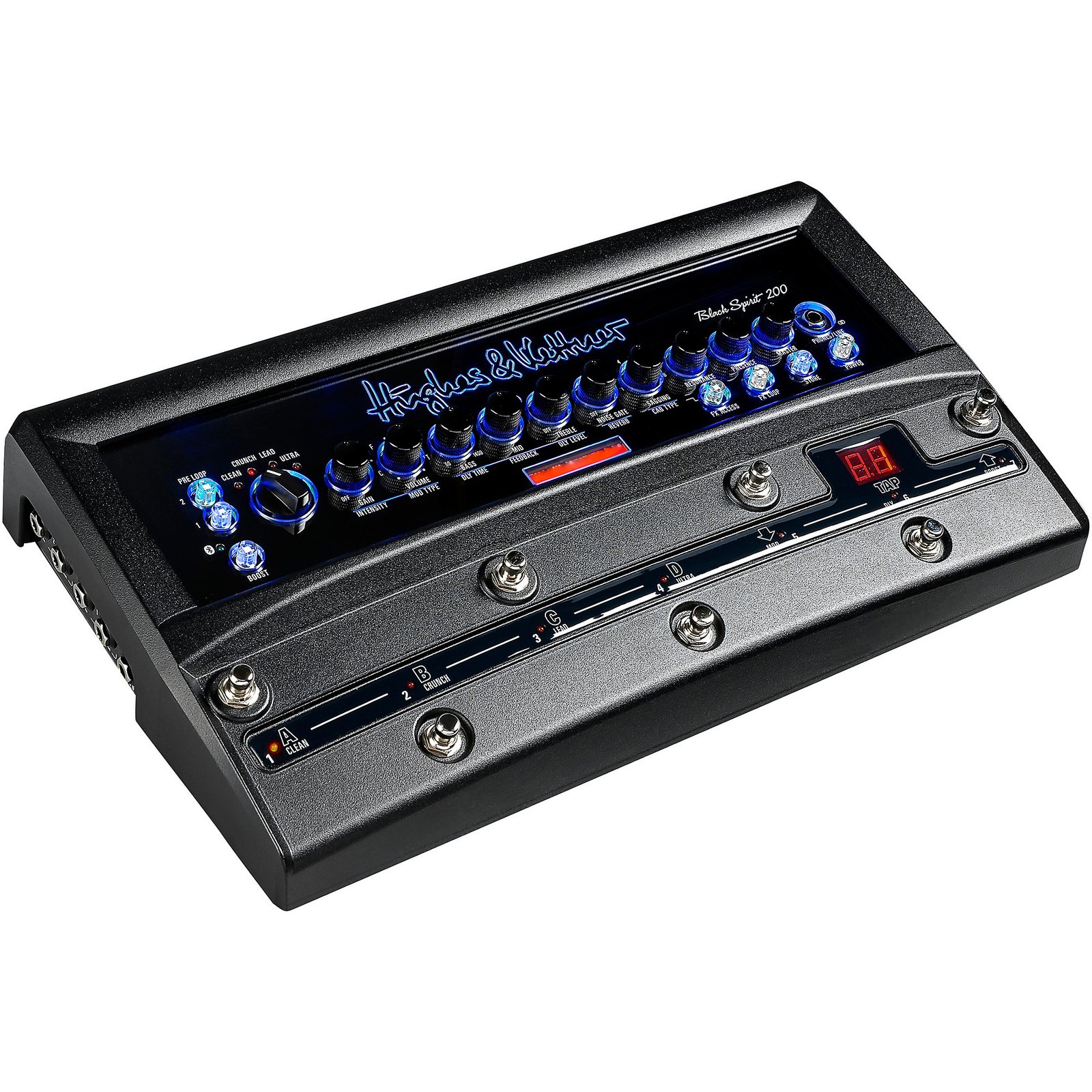
The Hughes & Kettner Spirit 200 Floor amp, officially named the Black Spirit 200 Floor, is a floor-format guitar amplifier that combines a 200-watt power amp with four analog channels, built-in effects, programmable controls, and direct-output features. It is designed for guitarists who want a flexible rig without relying on a conventional amplifier head and a large pedalboard for every performance.
The floor format changes how the amplifier is carried, positioned, and connected, but the important buying questions remain the same: does it provide the tones you need, can it drive your speaker safely, does its routing fit your setup, and are its controls practical on stage? This guide explains the published features, common uses, connection choices, setup basics, and what to inspect when buying new or used.
What Is the Black Spirit 200 Floor?
The Black Spirit 200 Floor is a guitar amplifier in a floor unit rather than a traditional amp head or combo cabinet. A player connects a guitar, selects a channel, shapes the tone, and sends the output to a compatible speaker cabinet or recording and monitoring system. The unit also provides connections for effects, foot control, MIDI, and a balanced direct output. Depending on the rig, a guitarist may use it as the central amplifier and switching device, with only a few external pedals added.
Floor-based amplifiers can appeal to musicians who travel frequently, perform on stages with shared backline equipment, or want to move between rehearsal and recording with a consistent set of presets. The format is not automatically better than an amp head. It is a different approach to portability and signal routing. A guitarist who prefers a dedicated head, a particular valve power section, or an integrated speaker cabinet should compare the physical workflow as well as the sound.
Four Analog Channels
Hughes & Kettner lists four channels: Clean, Crunch, Lead, and Ultra. These are broad tonal starting points rather than rigid genre labels. Clean is intended for clearer tones with less distortion. Crunch adds overdrive character that may suit classic rock rhythms. Lead offers more saturation for expressive single-note playing, while Ultra provides a higher-gain option for heavier sounds. The final result still depends on the guitar, pickups, playing dynamics, gain, equalization, cabinet, speaker, and room.
Four channels let a player keep several sounds ready without rebuilding the amplifier settings between songs. A musician might use Clean for arpeggios, Crunch for rhythm chords, Lead for a solo, and Ultra for a heavier section. The channels should be tested with the actual guitar and speaker. A bright single-coil instrument may react differently from a high-output humbucker guitar, even when the control settings are identical.
200-Watt Power Amplifier and PowerSoak
The manufacturer lists a 200-watt power amp and PowerSoak settings of 200, 20, 2, and 0 watts. This range gives the player options for different performance and monitoring situations. A compatible guitar cabinet may be used at higher output, while lower power settings can help adapt the rig to quieter environments. The 0-watt mode is associated with using the direct output without driving a speaker cabinet.
A power rating does not tell the whole story about loudness. Speaker sensitivity, cabinet construction, impedance, room size, and the rest of the signal chain influence the volume and feel. Follow the manual’s speaker-load requirements. The product page lists one speaker output for an 8–16 ohm load and indicates that the output can be switched between guitar cabinet and full-range speaker use. Do not connect a cabinet or monitor without checking the required configuration.
Built-In Reverb, Delay, and Modulation
The Black Spirit 200 Floor includes reverb, delay, and modulation effects. The listed modulation choices include chorus, phaser, flanger, and tremolo. Built-in effects can reduce the number of separate boxes needed for a compact rig. Reverb can add space, delay can create rhythmic repeats or sustain, and modulation can add movement or width to a sound.
Use effects in context. A delay that sounds impressive while practicing alone may become cluttered when drums, bass, and keyboards are playing. Too much reverb can blur fast passages, while chorus may widen a clean tone but soften its attack. When saving presets, watch for volume differences between channels and effect settings. Test the sounds at rehearsal volume before relying on them in a live performance.
Red Box AE+ Cabinet Emulation
Red Box AE+ is Hughes & Kettner’s speaker and cabinet-emulation technology. The product information describes eight cabinet emulations on the balanced XLR output. This can make direct recording or sending a signal to a venue’s mixing console more straightforward. Instead of placing a microphone in front of a physical guitar cabinet, the player can provide a cabinet-style signal from the amplifier.
The direct sound still depends on the selected cabinet emulation, amplifier settings, effects, gain structure, and receiving equipment. A sound engineer may request a particular output level or routing setup. Read the manual and confirm the correct connection. Do not mistake the speaker output for a line-level signal or connect a high-power speaker output to a mixer input.
Connectivity and Signal Routing
The manufacturer lists a serial effects loop, two additional pre-loops, a speaker output, balanced Red Box AE+, MIDI input and output, TRS control connections, Bluetooth control, an auxiliary input, and a phones/line jack. This makes the unit adaptable to pedalboards, external processors, MIDI controllers, recording interfaces, and full-range monitoring systems. The two pre-loops can be useful when a player wants external pedals to be switched or routed as part of the amplifier’s stored setup.
Before plugging several devices into the system, draw a simple signal-flow diagram. Identify the guitar input, any pedals before the amplifier, the pre-loops, effects loop, speaker output, and direct output. Keep speaker-level and line-level connections separate. Label cables and take a photograph of the working stage setup so that it can be recreated after transport. If the rig includes unfamiliar equipment, ask a technician to confirm the connection plan.
Programmable Controls and Presets
The Black Spirit 200 Floor offers fully programmable controls according to the manufacturer’s feature list. The listed parameters include channel, gain, volume, EQ, sagging, presence, resonance, noise gate, effects parameters, effects loop, and cabinet type. The product page also describes direct access to 128 presets and Stomp-Box-Mode operation. These functions can help a player keep repeatable tones for different songs or performances.
Programmable controls require a little learning. A physical knob may not always match a stored value when a preset is active. Read the instructions to understand how the amplifier displays stored settings, how a parameter is edited, and how changes are saved. Create a small set of dependable presets before building a large library. Keep a backup or written reference for sounds that are important to a live set.
Power Supply and Speaker Safety
The manufacturer lists a mains input range of 100–240 volts at 50–60 Hz and a maximum power consumption of 300 watts. Check the actual unit’s rating label and use a suitable power source. Do not operate equipment with damaged power leads, a loose connector, liquid exposure, unusual heat, or signs of physical damage. Keep ventilation openings clear and place the floor unit where it cannot be crushed by stage cases or repeatedly struck by foot traffic.
For a speaker cabinet, follow the specified impedance range and the manual’s instructions about cabinet and full-range operation. Guitar cabinets and full-range monitors are designed for different purposes. Confirm the correct output mode and connection before turning up the power. If you are unsure about the cabinet load, ask a qualified technician or the manufacturer rather than experimenting with an unknown configuration.
Using the Floor Amp at Home
At home, the PowerSoak options and direct output may be useful when a guitarist wants to work on tones without always running a cabinet at performance volume. The physical controls allow the player to adjust sounds directly, while presets can store different setups. Make sure the monitoring arrangement follows the manual. Do not assume that every jack is a headphone output unless the documentation identifies it that way.
For quieter practice, start with a moderate setting and increase volume gradually. A high-gain tone that sounds exciting through headphones may behave differently through a real guitar cabinet. Try the same preset through the monitoring system you plan to use most often. Keep a record of settings that translate well between home and rehearsal.
Using It in a Studio or Live Rig
In a studio, Red Box AE+ can simplify direct recording and make repeatable cabinet-style sounds possible. A player can save a tone, record a reference, and recall the setup later. Some studios may still prefer a microphone and cabinet, so compare the direct signal with the sound of the physical speaker. The best recording approach depends on the genre, arrangement, room, and engineer’s workflow.
For live use, four channels and programmable presets can make scene changes easier. A guitarist should test switching in rehearsal, verify that levels remain consistent, and make sure MIDI or foot control works reliably. Confirm the venue’s preferred connection to the PA and keep a backup plan if a cable or controller fails. A compact rig still benefits from good cable management, labelled power supplies, and a safe stage layout.
How to Set Up a First Tone
Begin with a guitar and a compatible speaker cabinet or approved monitoring connection. Keep the master volume low while checking the speaker load and power configuration. Choose a Clean or moderate-gain channel, set EQ near a neutral starting point, and adjust gain before increasing channel volume. Change one control at a time so you can hear how it affects the result. Once the basic sound is balanced, add reverb or delay in small amounts.
Test each channel using the same guitar and playing pattern. This makes it easier to compare the character of Clean, Crunch, Lead, and Ultra without changing several variables. After you find a useful sound, save it using the documented preset process. Play with a full band if possible; a sound that feels large alone may need less bass or gain when it sits beside bass guitar and drums.
Buying New or Used
Before purchasing, confirm that the product is the Black Spirit 200 Floor rather than another member of the Black Spirit family. Compare the asking price with current availability, condition, included accessories, seller return terms, and warranty support. Ask whether the unit is new, refurbished, or used, and whether the power cable, foot control accessories, carry case, or other advertised items are included.
For a used unit, test each channel, switch, control, effect, MIDI connection, effects loop, XLR output, and speaker connection. Listen for crackling, intermittent sound, unexpected changes in volume, or noise when controls are moved. Inspect the chassis for impact damage and ask whether repairs, liquid exposure, or service work has occurred. A seller should be able to demonstrate safe operation using a compatible cabinet or approved direct-output setup.
Common Setup Mistakes
Do not assume that the 200-watt rating means the amplifier must always be used at full power. The PowerSoak settings are there to adapt to different environments. Another common mistake is confusing a speaker-level output with a balanced direct output. The two serve different purposes and should not be connected interchangeably.
It is also easy to spend too much time adjusting advanced parameters before learning the core channel sounds. Build a few useful presets first, then refine features such as sagging, resonance, noise-gate threshold, and effects depth. Make changes at realistic performance volume and test the result in the full band mix.
Manufacturer Documentation
The Hughes & Kettner Black Spirit 200 Floor product page provides the manufacturer’s current feature list and technical specifications, with access to downloads including the floor model manual. Use the manual for speaker connections, control behavior, power settings, and safe operation. Third-party listings may omit important details or confuse the model with another amplifier.
Frequently Asked Questions
What is the Hughes & Kettner Spirit 200 Floor?
It is a floor-format guitar amplifier in the Black Spirit 200 family, combining four amplifier channels, effects, programmable controls, and direct-output features in a compact unit.
How powerful is the Spirit 200 Floor?
Hughes & Kettner lists a 200-watt power amp and PowerSoak options of 200, 20, 2, and 0 watts. Speaker connections must follow the manual.
Does it include built-in effects?
Yes. The published feature list includes reverb, delay, and modulation effects such as chorus, phaser, flanger, and tremolo.
What is Red Box AE+?
It is Hughes & Kettner’s cabinet-emulation technology for sending a cabinet-style signal to recording or front-of-house equipment. Consult the manual for routing details.
What should I test when buying it used?
Test the channels, controls, effects, speaker and direct outputs, foot-control connections, and effects loop. Check for noise, intermittent operation, physical damage, missing accessories, and service history.
Conclusion
The Hughes & Kettner Black Spirit 200 Floor is a flexible option for guitarists who want a floor-based amplifier with four analog channels, a 200-watt power amp, integrated effects, programmable controls, PowerSoak options, and direct cabinet emulation. Its suitability depends on your speaker setup, preferred tone, routing needs, and performance workflow. Review the official manual, confirm speaker compatibility, test the controls, and compare condition and support before buying.
